EasyMeals
A subscription-based healthy meal delivery service that helps busy professionals maintain nutrition without the time investment of meal planning and cooking.
TL;DR
- Explored subscription-based healthy meal delivery for busy professionals through a structured design thinking process
- Key insight: The real barrier isn't cost—it's cognitive load. People need a system that removes mental overhead
- Selected ready-to-eat meal delivery as the core solution after evaluating multiple concepts through impact-feasibility analysis
- Applied PM frameworks: user research, problem reframing (HMW), ideation, prioritization, and business model design
- Developed as part of Designing and Managing Products and Platforms course at NUS
Starting with the Problem
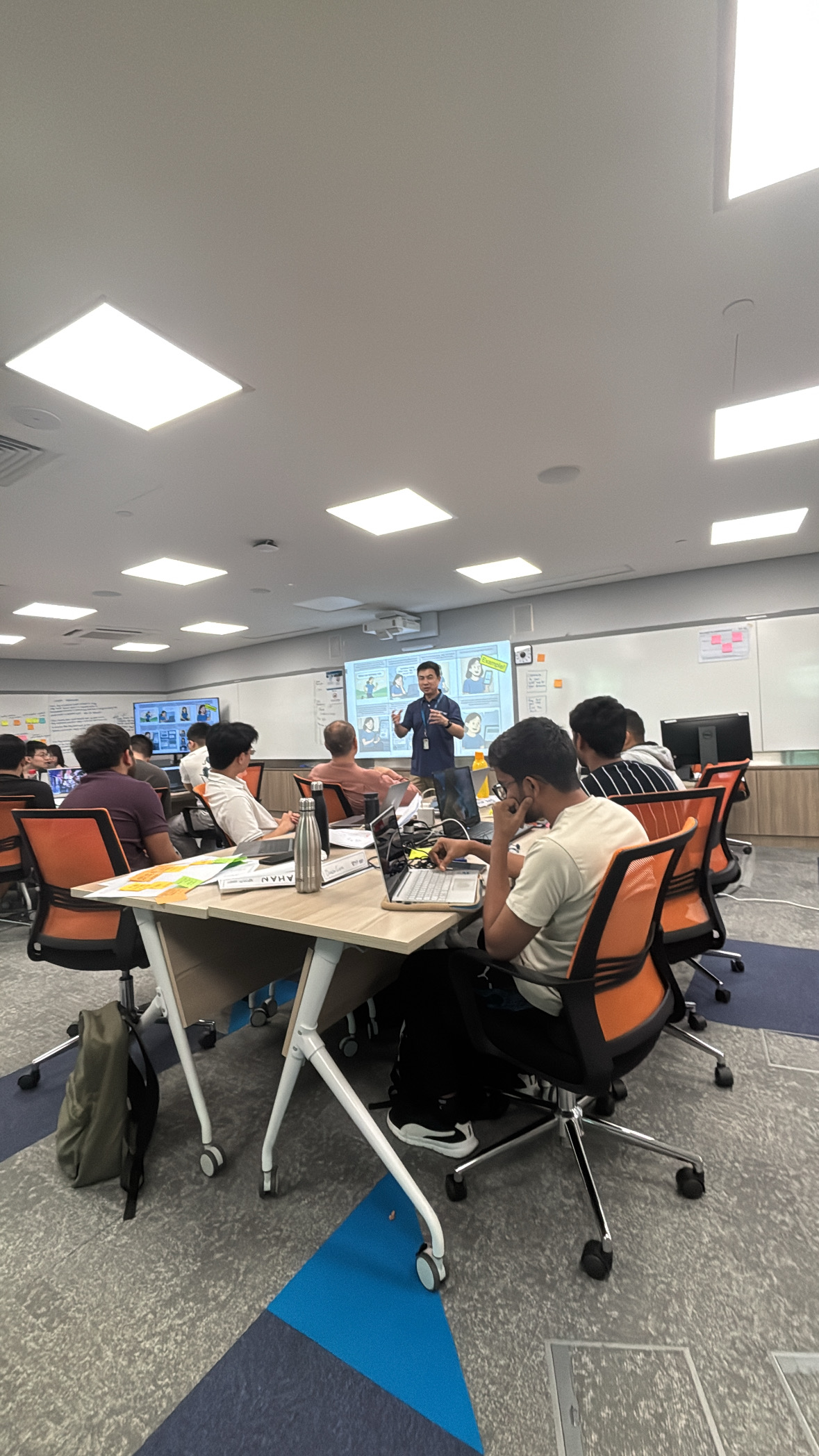
This case study came out of the Designing and Managing Products and Platforms course at NUS, led by faculty member Scott Si on January 15, 2026. The course pushed us to apply design thinking methodologies to real product challenges—exactly the kind of structured problem-solving I wanted to practice as a PM.
The Problem We Tackled
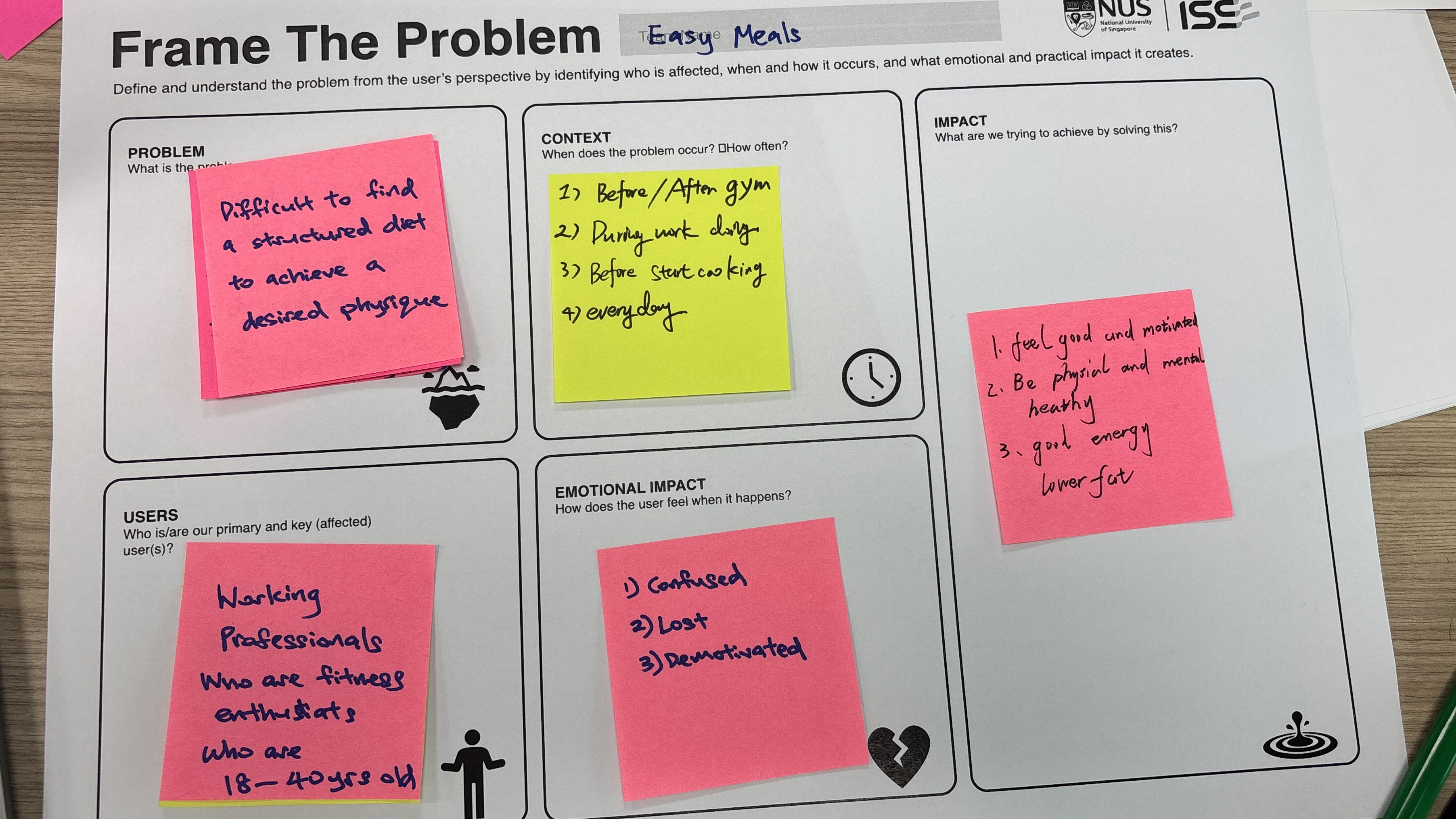
Busy working professionals want to eat healthy, but they don't have time. That's the simple version. The real problem is more nuanced: there's a gap between wanting to eat well and actually doing it consistently. Planning meals, grocery shopping, and cooking all compete with work demands and personal time. This isn't just about convenience—it affects energy levels, productivity, and long-term health.
Why This Problem Matters
I've seen this play out in my own life and with people around me. You start the week with good intentions, but by Wednesday you're grabbing whatever's convenient. Existing solutions don't quite hit the mark: meal prep services still require planning and cooking time, restaurant delivery is expensive and nutritionally inconsistent, and grocery delivery just moves the problem—you still have to cook.
There's a clear opportunity here: a solution that removes the time barrier while maintaining nutritional quality. But before jumping to solutions, I wanted to understand the real constraint. Is it time? Money? Knowledge? That's where the research started.
Understanding the User
Planning the Research
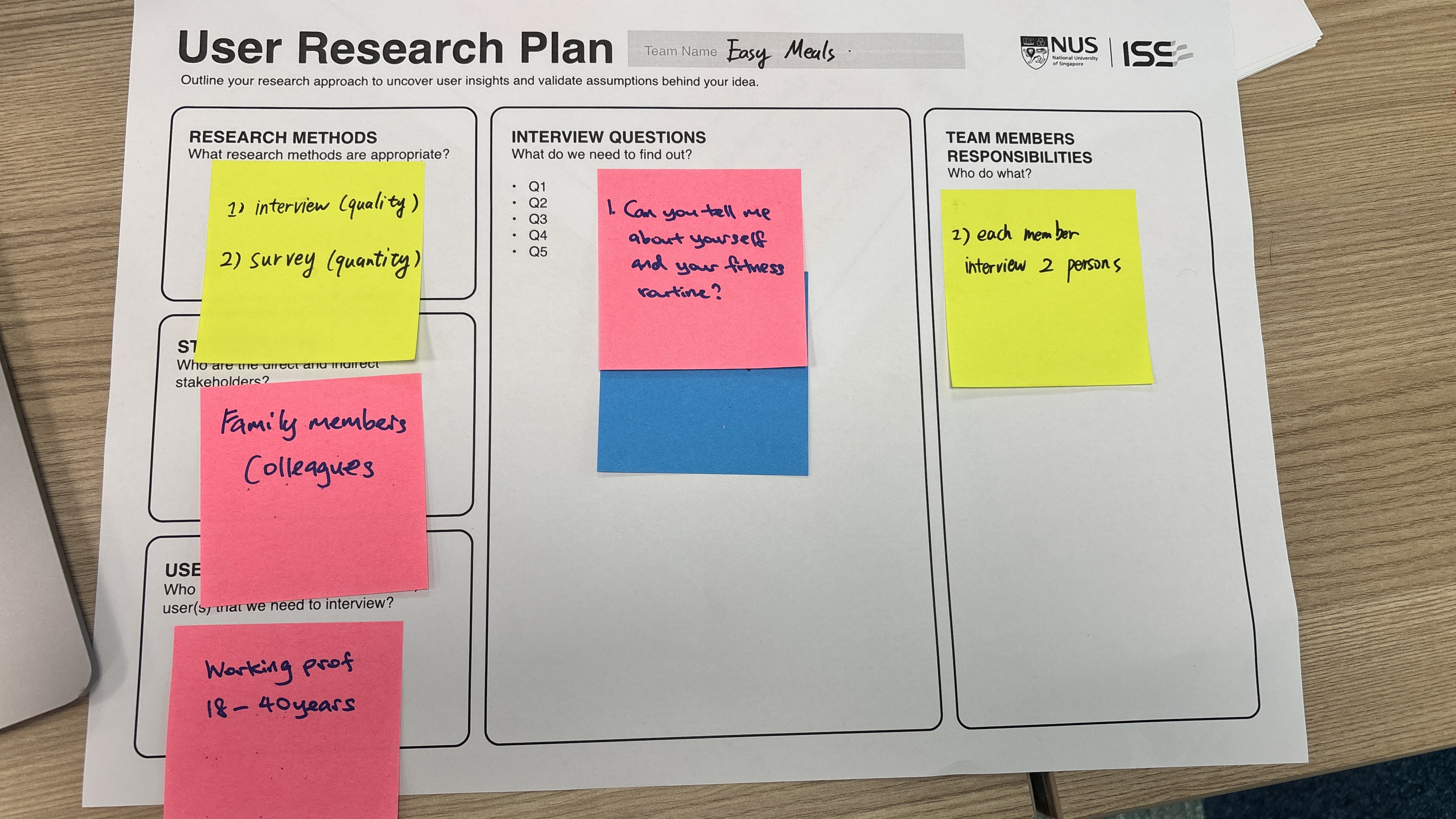
Before talking to anyone, we built a research plan. This might seem like extra work, but it's crucial—without clear objectives, you end up with a bunch of interesting anecdotes that don't lead anywhere. Our plan outlined what we needed to learn, who we should talk to, what questions would get us there, and how we'd synthesize the findings.
What We Learned
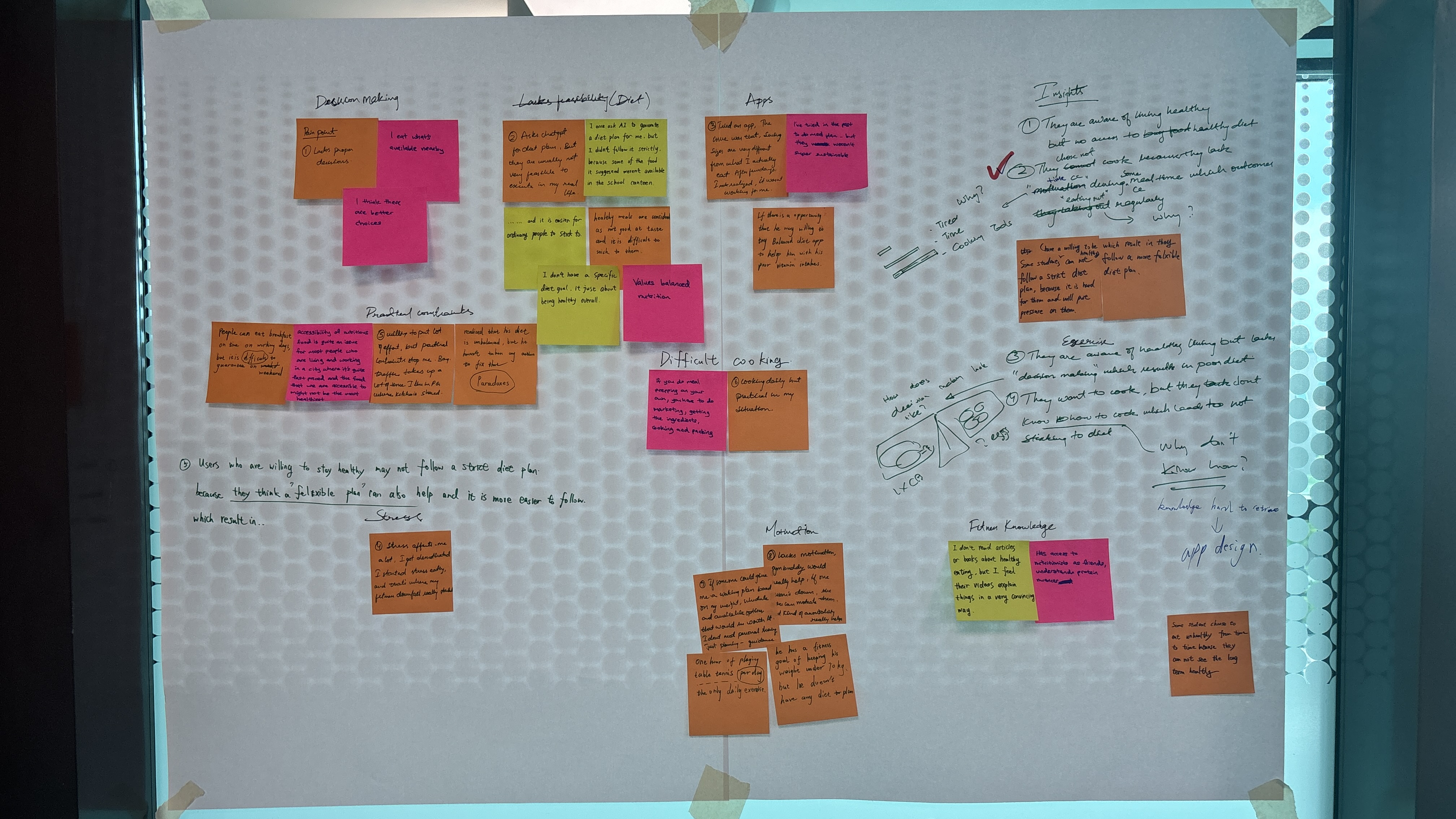
We interviewed working professionals across different industries—tech, finance, consulting, healthcare. The interviews were structured but conversational. We wanted to understand their daily routines, not just their meal preferences. What we found was consistent across most people:
- Time scarcity is real: Planning meals, grocery shopping, and cooking compete directly with work demands and personal time. It's not just about hours—it's about mental energy.
- Decision fatigue hits hard: By the end of a workday, making one more choice about what to eat feels exhausting. People default to whatever's easiest.
- Nutritional knowledge gap: People aren't sure what a "balanced meal" actually means for their lifestyle. They know they should eat better, but the "how" is unclear.
- Inconsistent habits: Good intentions don't translate to consistent behavior. Without structure, people fall back to old patterns.
The Core Insight
The real barrier isn't cost or preference—it's cognitive load. Professionals want healthy meals, but they need a system that removes the mental overhead of planning and decision-making. They're willing to pay for convenience if it delivers consistent, high-quality nutrition without requiring their time or attention.
This insight changed how we thought about the solution. It's not about making healthy food cheaper or more accessible—it's about removing the cognitive burden. That's a fundamentally different product problem.
Reframing the Problem
Why Reframing Matters
Before jumping into solutions, we spent time reframing the problem from multiple angles. This is where PM thinking really matters—the way you frame a problem determines what solutions are even possible. We looked at it from the user's perspective (what do they actually need?), the business perspective (what's viable?), and the system perspective (what are the constraints?).
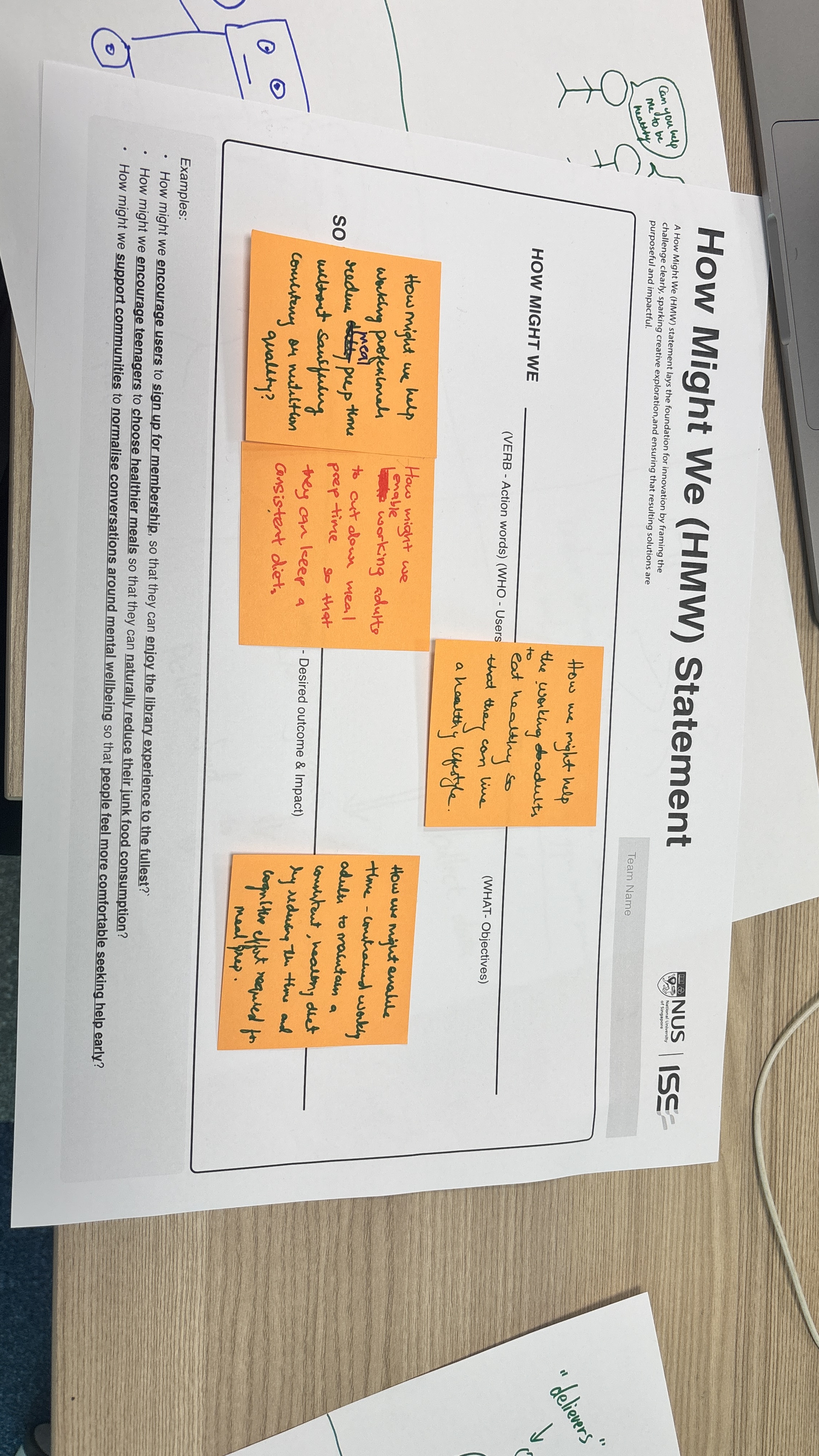
Our How Might We Statement
How might we help busy professionals maintain consistent, healthy eating habits without requiring time for meal planning or cooking?
This HMW statement does a few important things: it focuses on the core constraint (time), emphasizes outcomes (consistent, healthy eating), and leaves room for multiple solution approaches. It also acknowledges that our users are willing to invest resources (money) but not time—that's a critical distinction for business model design.
The framing matters because it prevents us from building the wrong thing. If we'd framed it as "How might we make healthy food cheaper?" we'd end up with a completely different solution. By focusing on removing the time constraint, we're solving the actual problem.
Exploring Solutions
With a clear problem statement, we started generating solution concepts. The key here was to explore broadly first, then narrow down. We brainstormed multiple approaches:
- Meal kit delivery: Pre-portioned ingredients with recipes. We deprioritized this because it still requires cooking time—it doesn't solve the core constraint.
- AI meal planner: Personalized meal plans with automated grocery lists. Interesting, but still requires shopping and cooking. Plus, the complexity and uncertain user adoption made it risky.
- Restaurant partnership platform: Curated healthy options from local restaurants. This had quality control challenges and higher costs, making it hard to scale consistently.
- Ready-to-eat meal delivery: Fully prepared, nutritionally balanced meals delivered on schedule. This directly addresses the time constraint while maintaining quality.
- In-app fitness integration: Connect meal recommendations with fitness goals. This could differentiate the offering and create a more holistic health solution.
Why We Eliminated Some Ideas
Ideas that still required user time (cooking, shopping) were eliminated immediately—they didn't address the core constraint. Solutions with high operational complexity or quality control challenges were deprioritized due to feasibility concerns. We kept the focus on solutions that could deliver consistent value with minimal user effort.
This is where PM judgment comes in: not every interesting idea is a good idea. The meal kit concept seemed attractive at first, but it doesn't solve the problem. The AI planner is technically interesting, but it's solving the wrong thing. We needed to stay disciplined about the core constraint.
Making the Decision
Impact vs Feasibility Analysis
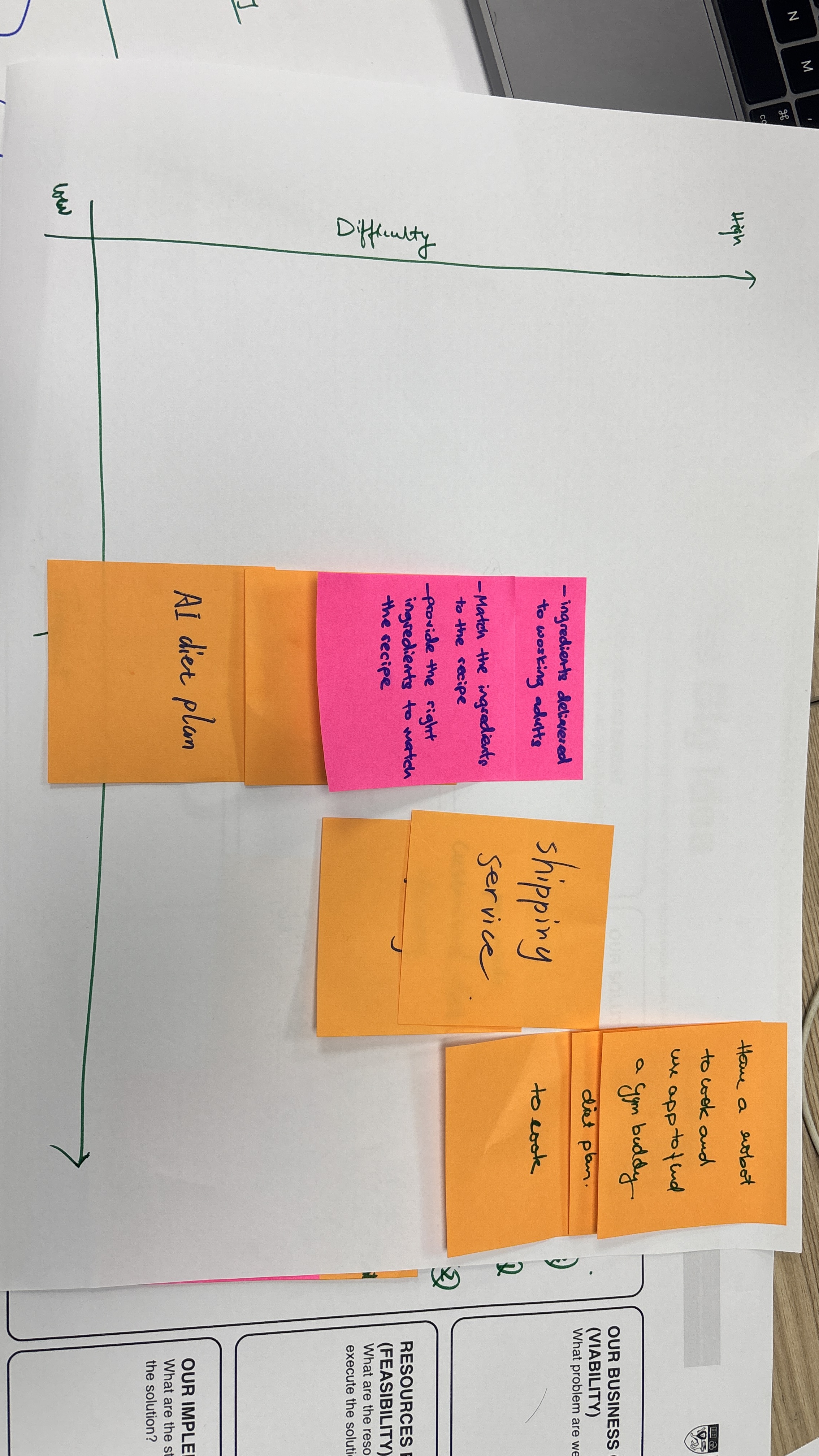
We evaluated each solution concept using an impact-feasibility matrix. This is a standard PM tool, but it's only useful if you're honest about both dimensions. Here's how we plotted them:
- High impact, high feasibility: Ready-to-eat meal delivery. It addresses the core problem directly, has a proven business model (think Freshly, Factor), and has a clear operational path. This was our winner.
- High impact, medium feasibility: Fitness integration feature. Adds value and differentiates, but requires additional development and partnerships. We kept this as a supporting feature.
- Medium impact, high feasibility: Meal kit delivery. Easier to execute, but doesn't solve the time constraint. Not worth pursuing.
- Low impact, low feasibility: Complex AI planning systems. High development cost, uncertain user adoption. Too risky for the value.
Building the Action Plan
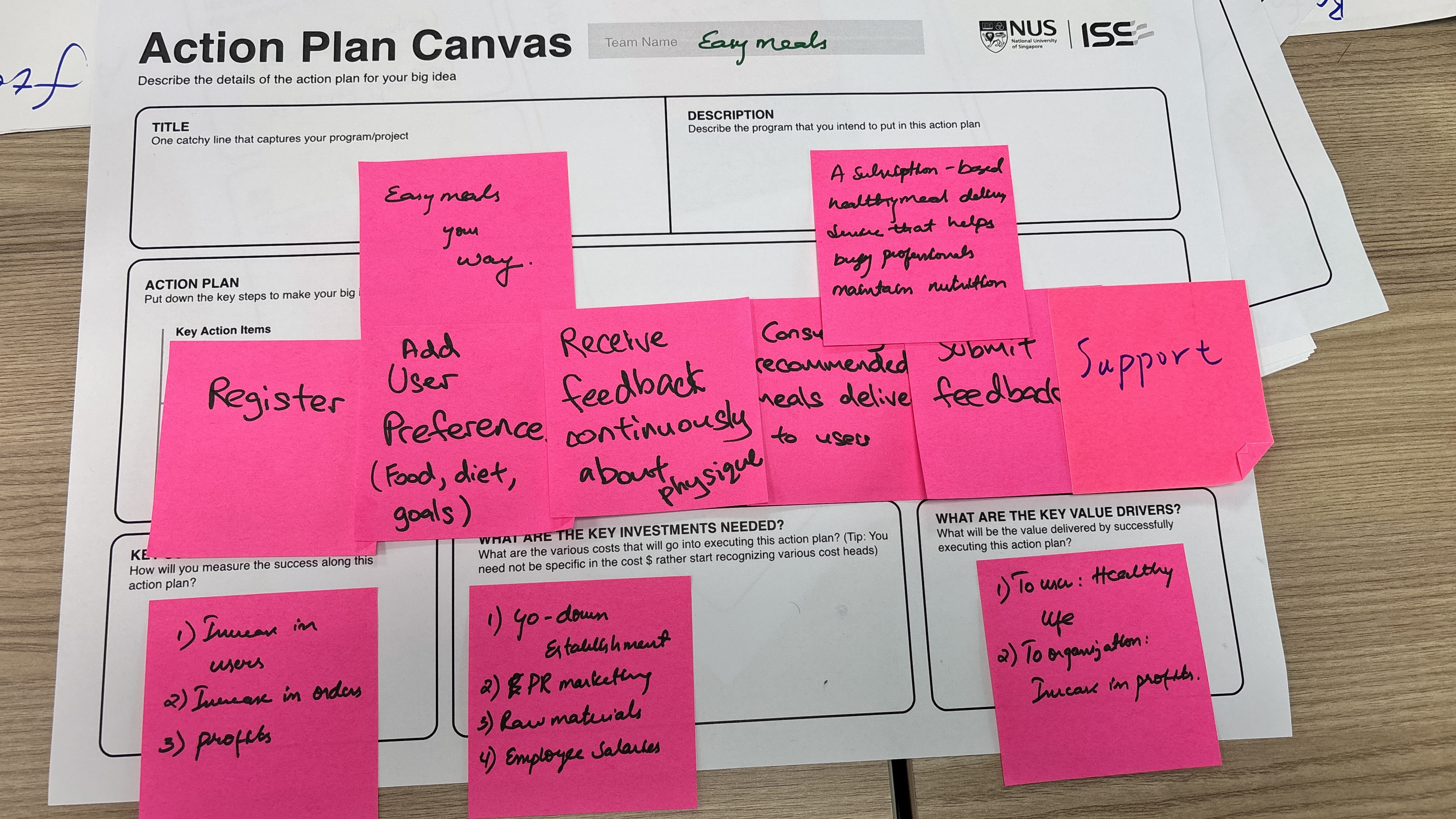
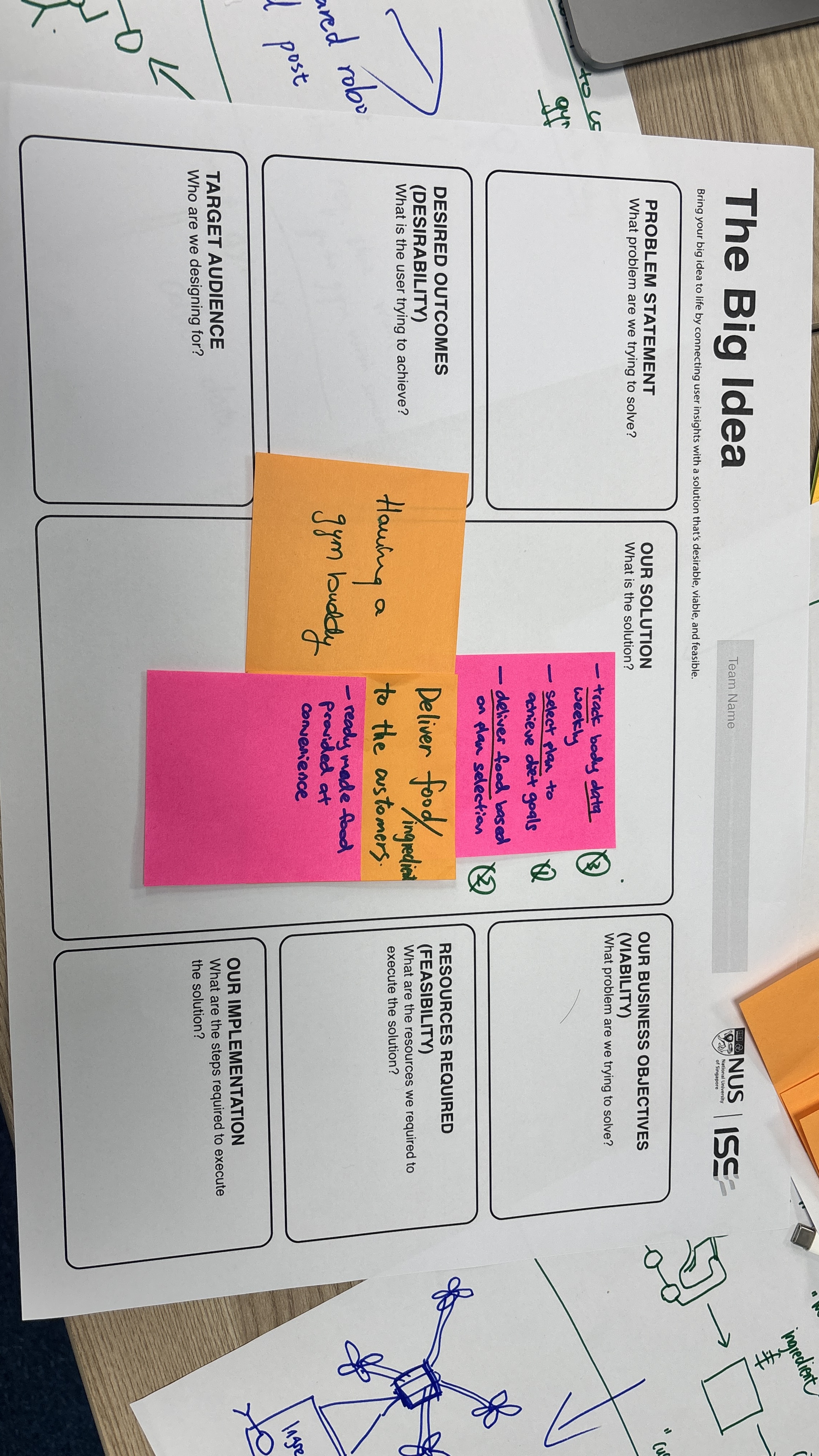
After selecting the solution, we built an action plan canvas. This wasn't just about what to build—it was about how to build it systematically. We identified key stakeholders (users, delivery partners, kitchen operations), required resources (kitchen capacity, delivery network, technology platform), potential risks (food safety, quality control, scaling), success metrics (retention rate, meal quality scores, time saved per user), and a phased approach to market.
The action plan forced us to think beyond the product concept to the operational reality. This is where many product ideas fail—not because the concept is wrong, but because the execution plan is incomplete.
Why We Chose This Solution
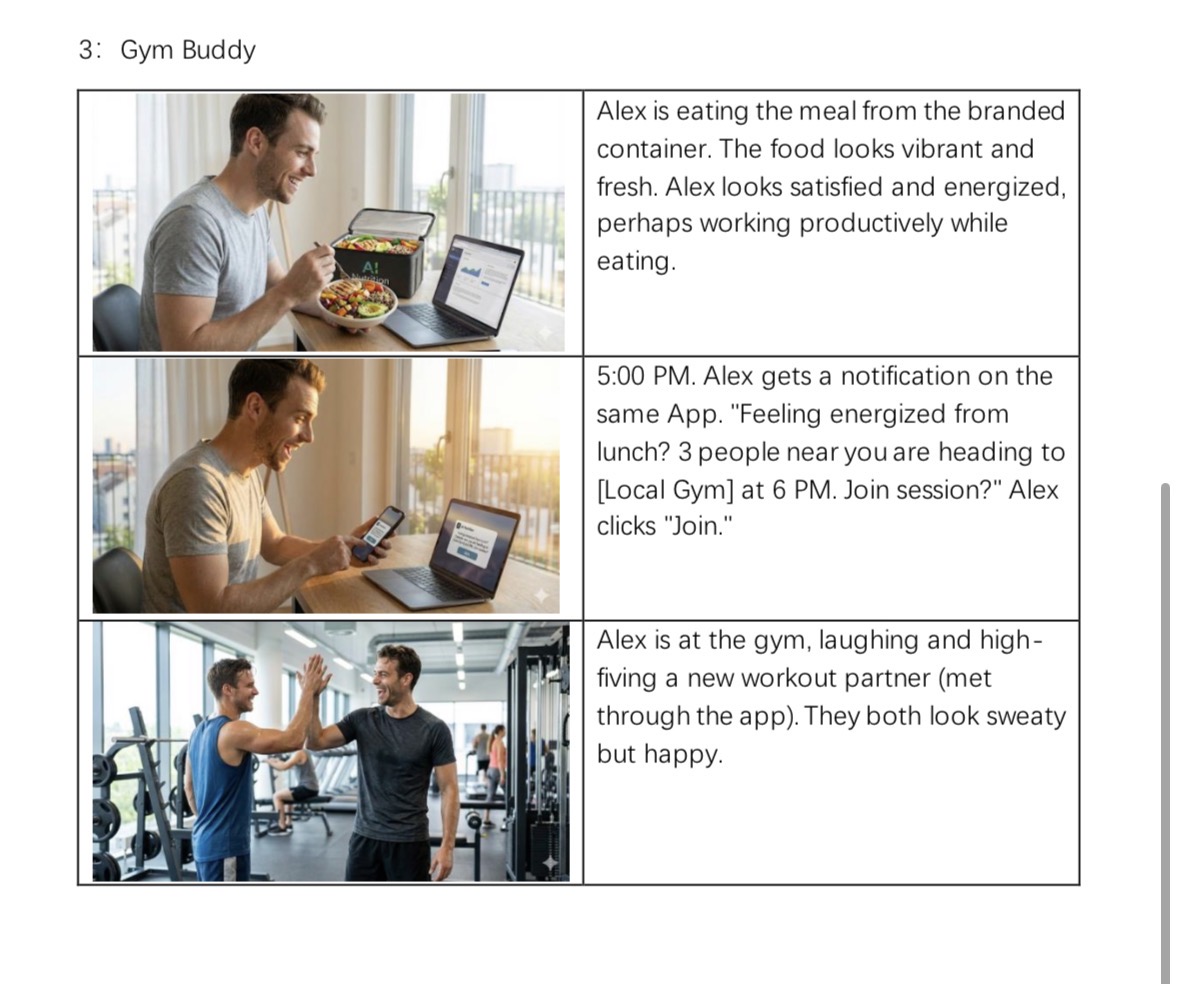
Ready-to-eat meal delivery directly addresses the time constraint while maintaining nutritional quality. The subscription model provides predictable revenue and creates user commitment—both are product features, not just business mechanics. The "Gym Buddy" feature was included as a supporting feature to differentiate the offering and create a more holistic health solution, but it's clearly secondary to the core value proposition.
The Solution: EasyMeals
What We Built
EasyMeals is a subscription-based healthy meal delivery service that delivers ready-to-eat, nutritionally balanced meals to busy working professionals. The core value proposition is simple: remove the need for meal planning, grocery shopping, and cooking while ensuring consistent nutritional quality.
The Business Model
The subscription model isn't just about revenue—it's a product feature. It creates commitment, reduces decision fatigue (no daily ordering), and provides predictable demand for operations. Here's how we structured it:
- Weekly plans: 5, 7, or 10 meals per week to match different lifestyles
- Monthly plans: Discounted rates for longer commitments, improving retention
- Flexible pausing: Users can pause subscriptions for travel or schedule changes—this reduces churn
- Nutritional customization: Options for dietary restrictions and calorie targets, making it personal
Key Features
Core Feature: Healthy Meal Delivery
- Pre-prepared, nutritionally balanced meals (no cooking required)
- Delivered on a set schedule (weekly or bi-weekly, based on plan)
- Ready to eat with minimal heating (microwave-safe packaging)
- Full nutritional information and ingredient transparency (builds trust)
Supporting Feature: "Gym Buddy"
- In-app feature connecting fitness goals with meal recommendations
- Meal suggestions aligned with workout schedules and fitness objectives
- Progress tracking and motivation through integrated health metrics
- Creates differentiation beyond just meal delivery—it's a holistic health solution
Visualizing the Experience
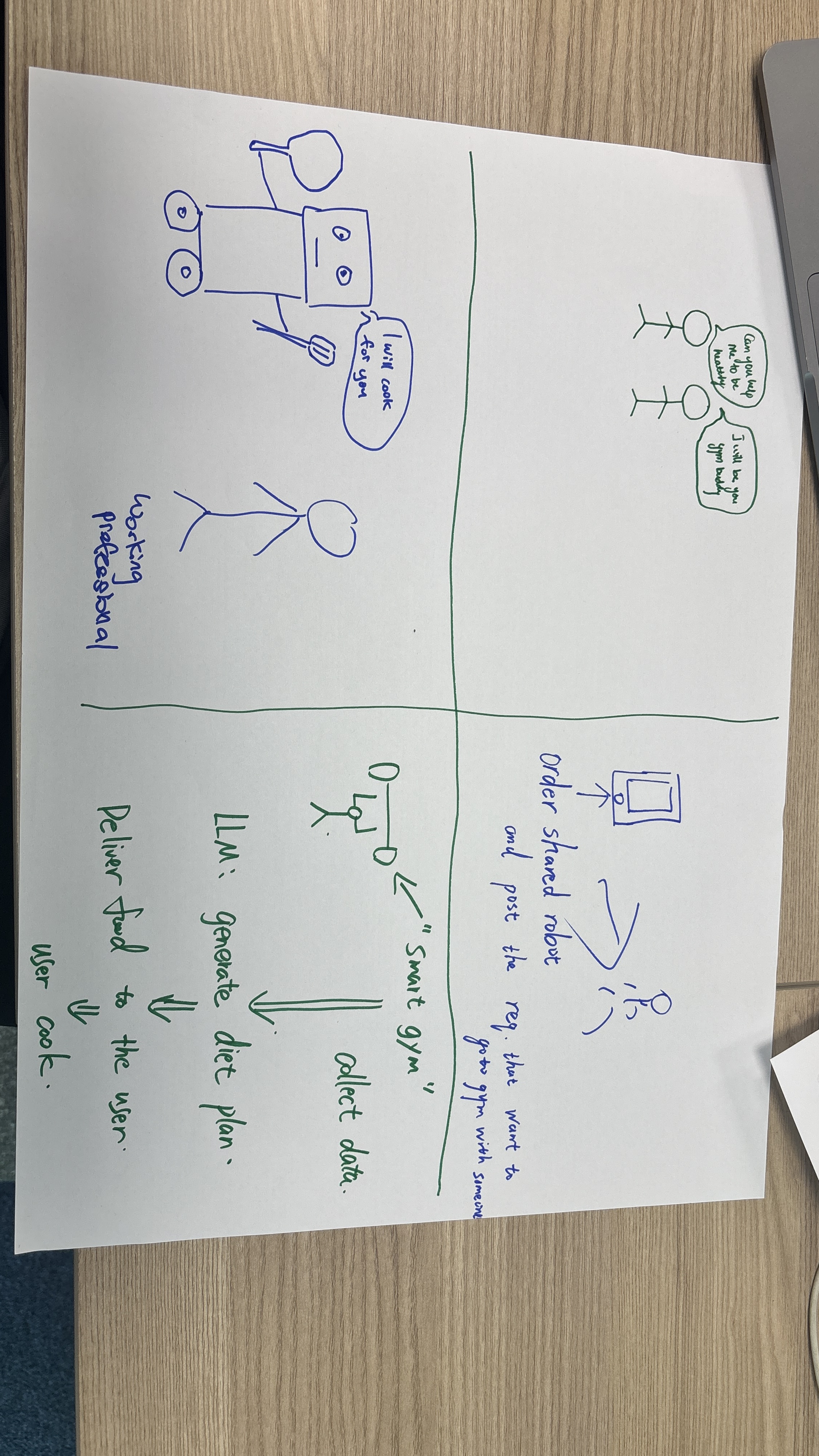
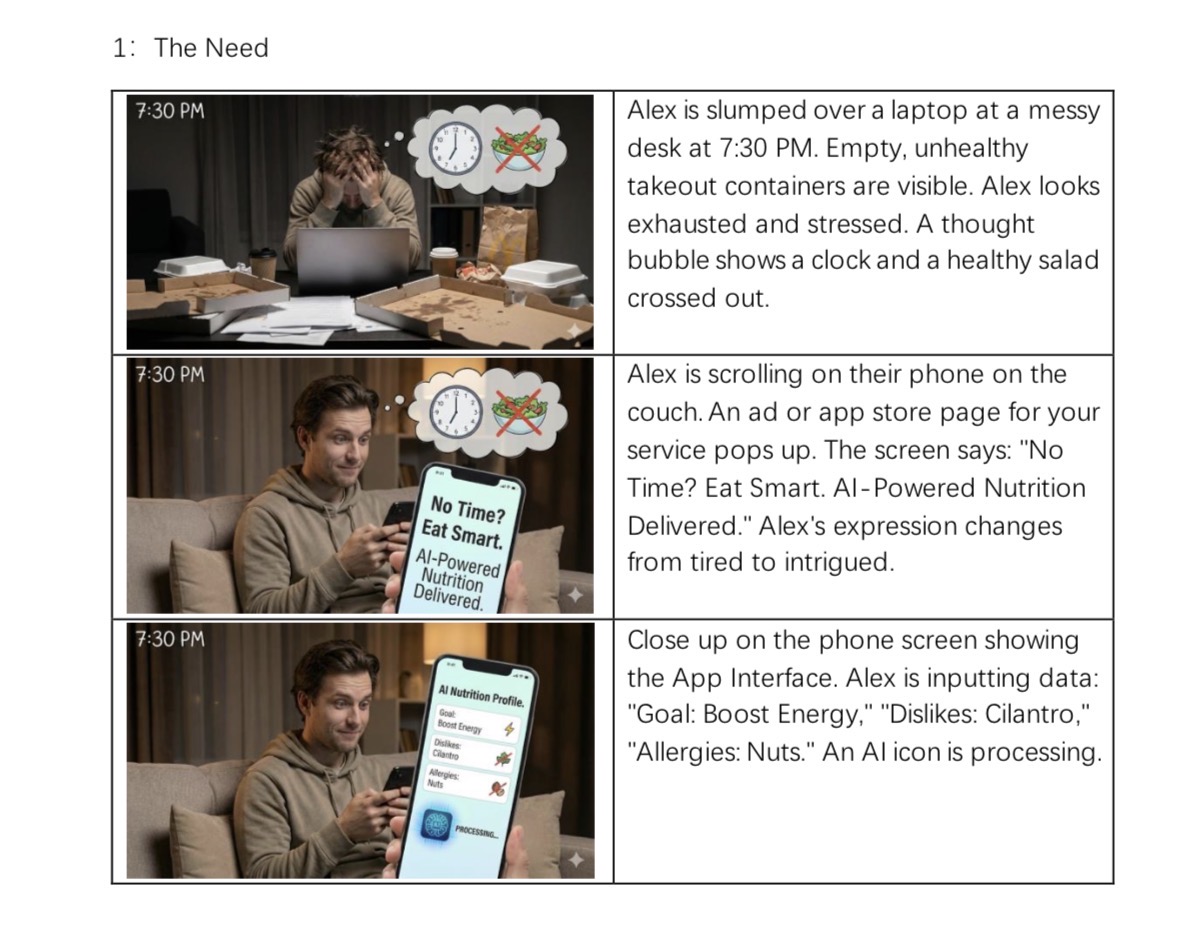
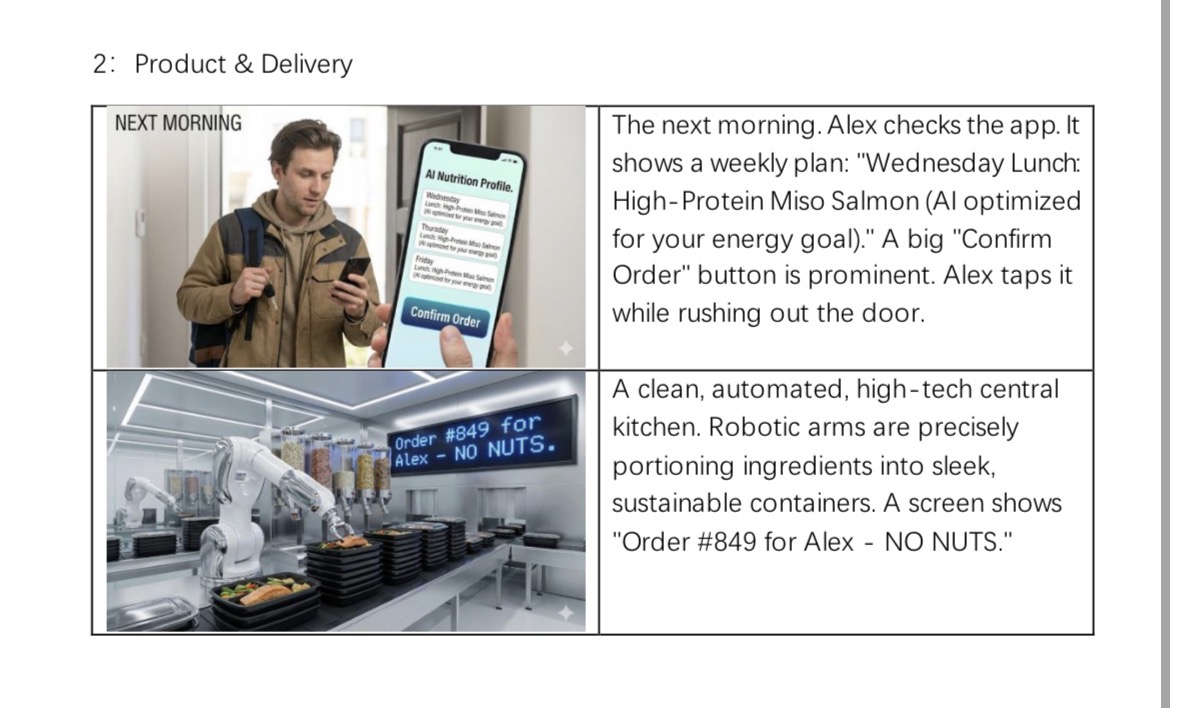
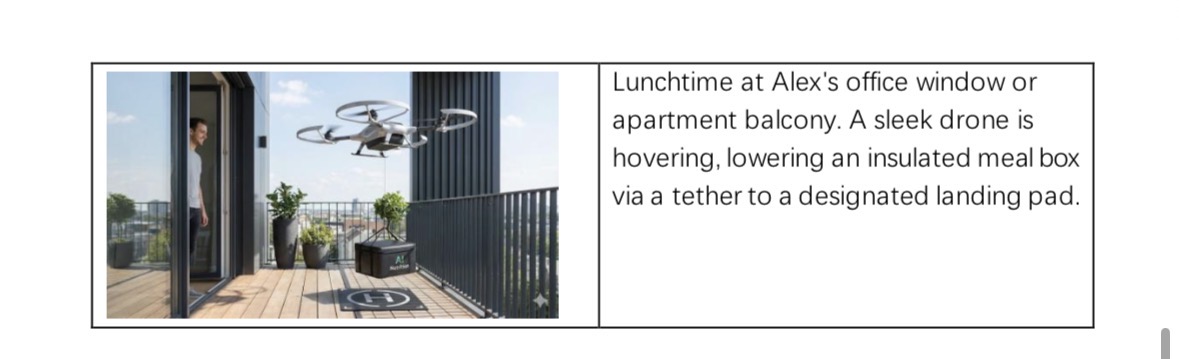
To communicate the user experience, we created storyboards that visualize key moments in the journey. These aren't just pretty pictures—they help us think through the emotional journey, identify potential friction points, and ensure we're delivering value at the right moments.
My Role & Contribution
As the product strategy lead, I owned several key areas of this project:
- User research: Led interview sessions and synthesized insights into actionable pain points. I pushed the team to dig deeper than surface-level complaints to understand the underlying cognitive load issue.
- Problem reframing: Facilitated the HMW sessions and helped the team move from a vague problem statement to a focused, actionable framing. This required pushing back on assumptions and keeping us honest about what we were actually solving.
- Solution evaluation: Conducted the impact-feasibility analysis and built the framework for decision-making. I made sure we weren't just picking the "coolest" idea, but the one that actually solved the problem.
- Business model design: Designed the subscription structure and pricing tiers. This wasn't just about revenue—it was about creating product features (commitment, reduced decision fatigue) through the business model.
- User journey mapping: Mapped the end-to-end experience to identify key touchpoints and value delivery moments. This helped us understand where the product needed to excel and where we could optimize.
- Market analysis: Analyzed competitive landscape and market viability. I researched existing meal delivery services to understand what worked, what didn't, and where we could differentiate.
- Documentation: Documented decision rationale and trade-offs for stakeholder communication. This is crucial—if you can't explain why you made a decision, you probably didn't think it through well enough.
This project was a great exercise in applying PM frameworks to a real problem. It reinforced the importance of structured thinking, user research, and making decisions based on data and constraints, not just intuition.
Key Metrics
- Subscription plans offered in 3 sizes: 5, 7, or 10 meals per week, plus monthly discounted tiers
- Ready-to-eat delivery model removes meal planning, grocery shopping, and cooking friction entirely
- "Gym Buddy" supporting feature aligns meal recommendations with user workout schedules and fitness goals
- Solution selected through structured impact-feasibility analysis evaluating multiple concepts head-to-head
- Flexible subscription pausing designed to reduce churn without cancellation
- Central kitchen model with established delivery network integration (DoorDash / Uber Eats) to minimise operational risk
- Product designed for single-city launch with a proven geographic expansion playbook
The User Journey
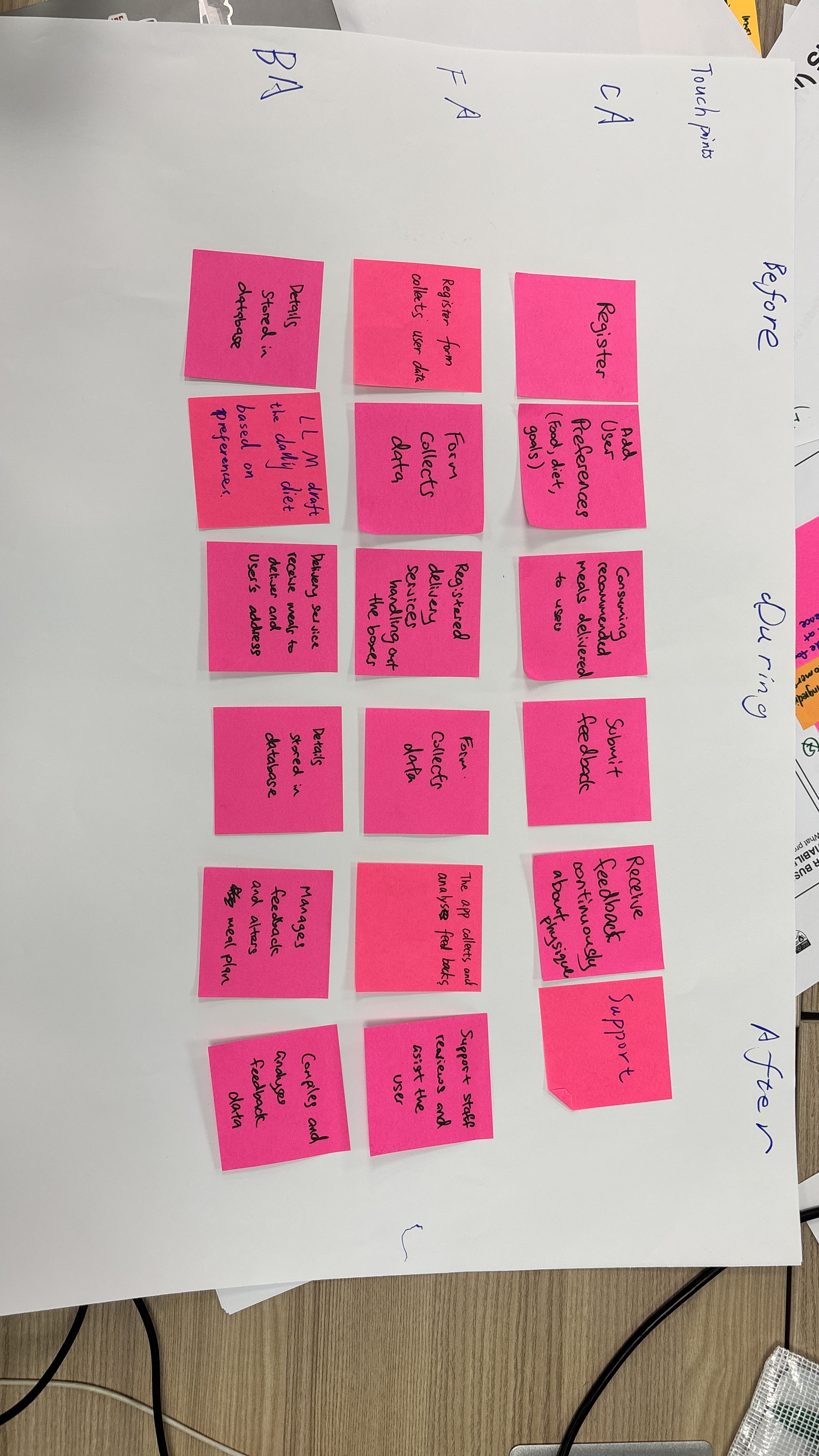
Understanding the journey helps us see where the product delivers value and where it might create friction. Here's how the experience changes for users:
Before EasyMeals
- Sunday: Spend 2-3 hours meal planning and grocery shopping (time they'd rather spend on other things)
- Weekdays: 30-45 minutes daily for cooking and cleanup (competing with work and personal time)
- Constant decisions: What to eat? What to buy? What to cook? Decision fatigue sets in
- Inconsistent nutrition: When time is short, people fall back to convenience foods that aren't healthy
During EasyMeals Experience
- Initial setup: One-time subscription selection and dietary preferences (5 minutes, then it's done)
- Weekly delivery: Meals arrive on schedule, no decision-making required (removes cognitive load)
- Daily routine: Grab a meal from the fridge, heat if needed, eat within minutes (saves 30-45 minutes per day)
- Gym Buddy integration: Meal recommendations align with workout schedule (creates a holistic health experience)
After EasyMeals
- Time savings: 5-7 hours per week reclaimed from meal planning and cooking (that's a full workday)
- Consistent nutrition: Reliable access to balanced meals without the mental overhead
- Reduced stress: No daily decisions about meals—the system handles it
- Better health outcomes: Improved energy levels, better fitness progress, and long-term health benefits
Feasibility & Viability
As a PM, I need to think beyond the product concept to whether it can actually work in the real world. Here's my assessment:
Technical and Operational Feasibility
- Meal preparation: Central kitchen model with quality control processes. This is proven—companies like Freshly and Factor have shown it works. The challenge is scaling while maintaining quality.
- Delivery logistics: Established delivery networks (DoorDash, Uber Eats) can be leveraged, or we can build incrementally. The infrastructure exists, which reduces risk.
- Technology platform: Subscription management and app development are well-understood technical challenges. No cutting-edge tech required, which keeps development risk low.
- Scaling considerations: Kitchen capacity and delivery coverage need to scale with user base. This is an operational challenge, not a technical one—manageable with proper planning.
Business Viability and Scalability
- Market validation: Existing meal delivery services (Freshly, Factor, HelloFresh) demonstrate market demand and willingness to pay. We're not creating a new category—we're entering a proven market with a focused value proposition.
- Revenue model: Subscription model provides predictable recurring revenue, which is attractive for investors and makes unit economics easier to manage.
- Unit economics: Bulk preparation and delivery optimization can achieve sustainable margins. The key is volume—you need enough subscribers to make the kitchen economics work.
- Competitive differentiation: Focus on nutritional quality and fitness integration differentiates from generic food delivery. The "Gym Buddy" feature creates a moat.
- Scalability path: Start with single-city operations (lower risk, easier quality control), expand to multiple cities as operations mature. This is a proven playbook.
Key risks: Operational complexity (food safety, quality control), high customer acquisition costs (common in subscription businesses), and need for consistent quality at scale. These are manageable with proper operational planning and gradual scaling, but they're real risks that need to be addressed.
Key Learnings
What I Learned About Product Management
- Problem framing shapes everything: The HMW statement we developed shaped the entire solution space. Taking time to reframe the problem correctly prevented us from building the wrong solution. This is a PM superpower—getting the problem right before you start building.
- Constraints drive innovation: The time constraint forced us to eliminate solutions that seemed attractive but didn't address the core problem. Constraints aren't limitations—they're clarity. They help you say no to good ideas that aren't the right ideas.
- Business model is part of the product: The subscription model wasn't just a monetization strategy—it created user commitment and predictable behavior, which are product features. How you make money changes how users interact with your product.
- Supporting features need clear rationale: "Gym Buddy" was included because it differentiated the offering, but it needed to be clearly secondary to the core value proposition. Feature creep is real, and every feature needs to justify its existence.
- Feasibility analysis prevents over-engineering: Evaluating solutions early prevented us from pursuing technically interesting but operationally complex ideas. The best solution is the one that solves the problem and can actually be built and operated.
What I'd Do Differently Next Time
- Quantitative validation: I'd conduct surveys to validate willingness to pay and price sensitivity before finalizing the business model. User interviews give you qualitative insights, but pricing decisions need quantitative data.
- Operational deep-dive: I'd develop a more detailed operational plan including kitchen capacity, delivery logistics, and quality control processes. The high-level plan is good, but execution requires more detail.
- Competitive analysis: I'd do a more thorough analysis of existing meal delivery services to identify specific differentiation opportunities. Understanding the competitive landscape helps you position better.
- User testing: I'd create low-fidelity prototypes or service blueprints to test the user experience before full implementation. Even a concept case study benefits from user validation.
- Financial modeling: I'd build a more detailed financial model including unit economics, customer acquisition costs, and break-even analysis. This helps you understand if the business actually works, not just if the product is good.
This project reinforced that product management is about structured thinking, user empathy, and making decisions with incomplete information. The frameworks help, but judgment matters more. Knowing when to dig deeper, when to move forward, and when to say no—that's the real skill.